
Solar panel cleaning
Don't let dirt and debris steal your power
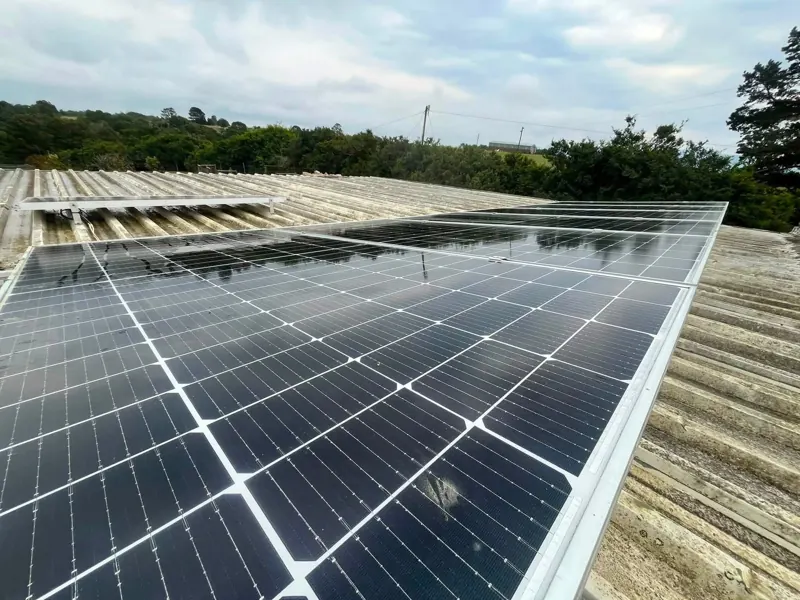
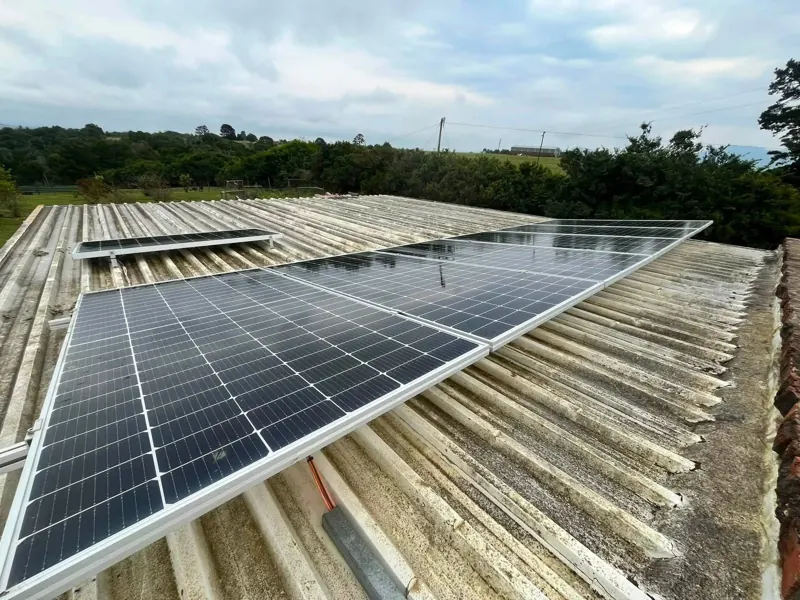
Dust, sea salt, bird droppings and pollen build up on your panels and block the sun. We clean them safely so your system can do what you paid for.
Why clean your panels
Dirty panels make less electricity
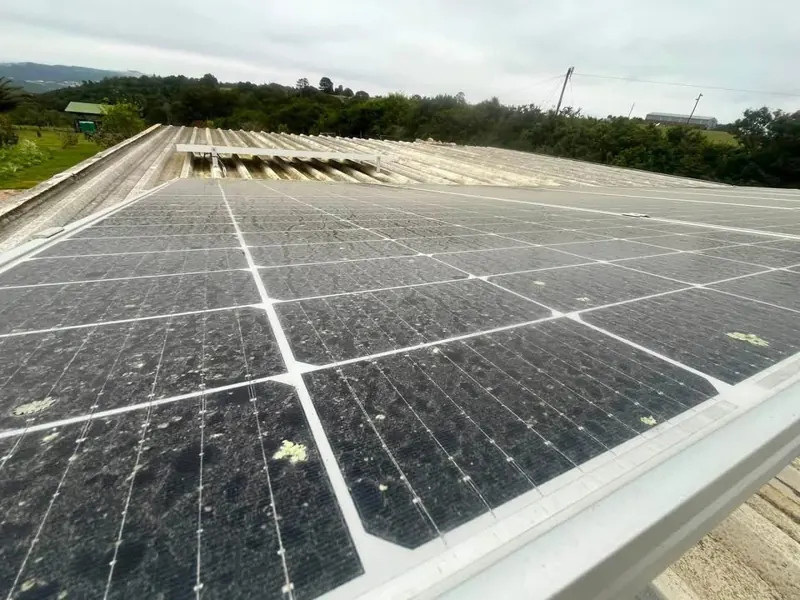
Solar panels only work when sunlight reaches the cells. On the coast, a film of salt and dust builds up quickly, and a few bird droppings can shade whole sections of a panel. Rain alone usually doesn't wash it off. It just moves the dirt around.
A professional clean gives your system its best chance to perform, and that matters more every time electricity prices go up.
- Soft brushes and clean water, no harsh chemicals
- No high-pressure blasting on the glass
- Frames and mounting area checked while we clean
- Residential, farm and commercial systems
- Once-off cleans or a regular schedule
What builds up on panels
The usual suspects
Sea salt
A fine film from the coastal air that dulls the glass, common in Mossel Bay, Glentana and Groot Brak.
Dust
Wind, gravel roads and building sites coat panels quickly.
Bird droppings
Small spots can shade whole cells and are stubborn to shift.
Leaves & pollen
Trees nearby? Debris collects along the frames and edges.
Recent solar cleans
From dull to sparkling
Solar FAQ
Solar panel cleaning questions
Why clean solar panels?
Dust, salt from the sea air, pollen and bird droppings build up on the glass and block sunlight, so your panels produce less power. Clean panels give your system its best chance to perform.
How do you clean panels without damaging them?
We use soft brushes, low pressure and clean water. No harsh chemicals and no high-pressure blasting on the panel surface.
How often should panels be cleaned?
Close to the sea or dusty roads, every few months is a good rule of thumb. Inland or sheltered roofs can go longer. We're happy to set up a regular schedule.
Book a solar panel clean
Roughly how many panels, and where? It opens WhatsApp with the details.